Beyond Hospitality to Family
You'll hear why welcoming the immigrant as a temporary guest falls short of what Jesus actually demanded, and what it looks like to treat a stranger as an irreplaceable member of your own body.
Liturgical Season
33 sermons in the archive.
You'll hear why welcoming the immigrant as a temporary guest falls short of what Jesus actually demanded, and what it looks like to treat a stranger as an irreplaceable member of your own body.
You'll work through a real question that Christians avoid: when Romans 13 says submit to governing authorities, and the government is actively harming vulnerable people, what are you actually supposed to do?
You'll hear how the Israelites' fear in the wilderness distorted their memory and led them to hoard what God gave freely, and what that pattern reveals about the fears that shape how we treat immigrants and strangers today.
You'll hear a direct challenge to the habit of sorting people into 'neighbors' and 'others,' and why Jesus identifies himself specifically with the people you'd least want at your door.
You'll hear a pastor work through what Leviticus actually commands about foreigners in your land, and why that ancient list should reorder the assumptions you walked in with about immigration.
You'll hear why Jesus had no reason to be baptized yet stepped into the river anyway, and what his choice to identify with broken humanity means for the moments when you feel too far gone, too ordinary, or too weak to be of use to God.
You'll hear why the very thing you're trying to escape, the struggle, the limitation, the pain, might be the place where God's blessing actually arrives, and what Jacob's all-night wrestling match has to do with the hardships you're carrying right now.
You'll see how the same impulse that made Thomas demand to touch Jesus' wounds shows up today when strangers interrogate disabled people in parking lots, and what a resurrection faith actually asks of you instead.
You'll come away with a sharper eye for the attitudes that make vulnerable people invisible, and a fresh angle on why the parable of the sheep and goats is less about earning salvation and more about what we fail to see right in front of us.
You'll hear why Paul's counterintuitive claim, that weakness is where God's power actually shows up, has something concrete to say about how we treat disabled people and how we face our own growing limitations.
You'll hear why Jesus placed people with disabilities at the center of his vision for God's kingdom, and what it means to build a community where belonging goes deeper than accessibility ramps and polite inclusion.
You'll hear why Jesus chose a passage about poverty and captivity to launch his entire ministry, and what it means that he deliberately left out the part about destroying his enemies.
You'll hear a clear-eyed account of what the Christian gospel actually is, and learn to recognize the six common substitutes, from self-help positivity to politics, that often replace it in Sunday sermons.
You'll hear why the impulse to fix, celebrate, and move on may actually be cutting you off from something real, and what it looks like to bring honest grief before God without expecting a tidy resolution.
You'll hear how Paul's decision to give up his right to payment unlocks a practical principle: the things we're most entitled to are sometimes the very things that block others from hearing what we most want them to hear.
You'll hear why the authority Jesus showed in a first-century synagogue is fundamentally different from every other kind of power you've encountered, and what it means that he used it to help someone who couldn't even ask for help.
You'll hear why Jonah's reluctant mission to his enemies is also the story of why human societies keep cycling through the same failures, and what it means that God finally broke that cycle rather than waiting for us to get it right.
You'll hear how God has repeatedly replaced unfaithful leaders with unexpected ones, from Samuel to David to Jesus's parable of the vineyard, and what that pattern means for ordinary Christians trying to stay faithful while the broader church loses its way.
You'll see how the opening five verses of Genesis connect directly to Jesus's baptism — and why that thread, from primordial chaos to the cross, is the spine of the entire biblical story.
You'll hear why the widow in Jesus's parable keeps showing up to a courtroom that has already failed her, and what her persistence reveals about who God is when your prayers seem to go unanswered.
You'll see how the early church's debate over who belongs was really a struggle over who holds power, and what it looks like today when church culture protects insiders at the cost of the gospel.
You'll come away with a clearer sense of how your own cultural background shapes what feels 'normal' in faith and church life, and why understanding the culture Jesus actually lived in changes what his most familiar stories mean.
You'll come away with a fresh way of seeing your own cultural background: not as something to leave behind when you walk into church, but as something God had a hand in creating.
You'll hear why the demographic shifts already reshaping American society demand that churches stop defaulting to comfortable, mono-ethnic patterns, and what it actually takes, in practice, to become a community that reflects the global body of Christ.
You'll hear why the diversity within a church community isn't a problem to manage but a gift that makes the whole body function as God designed, and you'll be asked to consider which part of that body you actually are.
You'll hear why lasting personal change can't come from moving cities, reinventing your appearance, or trying harder — and how the water-to-wine miracle points to the kind of transformation that actually reaches the core of who you are.
You'll hear a direct answer to why Jesus, who had nothing to repent of, submitted to baptism, and come away with a fresh sense of what your own baptism (or a future one) actually means: that God knows your name and claims you as his own.
You'll see through the story of Naaman that the moment obedience actually costs you something is exactly the moment it matters most, and that going only partway is the same as not going at all.
You'll see how Jesus consistently slipped away from the noise before and after intense seasons of ministry, and what his habit of solitary prayer suggests about why your own connection to God might feel thin when life gets chaotic.
You'll see how Jesus in the Garden of Gethsemane broke every rule about hiding pain, and what it looks like to bring your rawest, most honest self to God instead of performing calm you don't feel.
You'll trace how God disclosed himself—to a runaway slave, to a doubting patriarch, to an overwhelmed shepherd—through the specific names he chose, and discover what those names still say about what God is toward you right now.
You'll hear an honest confession about hating fellow believers across political lines, and a challenge to take seriously the idea that God might be speaking through people you've already dismissed.
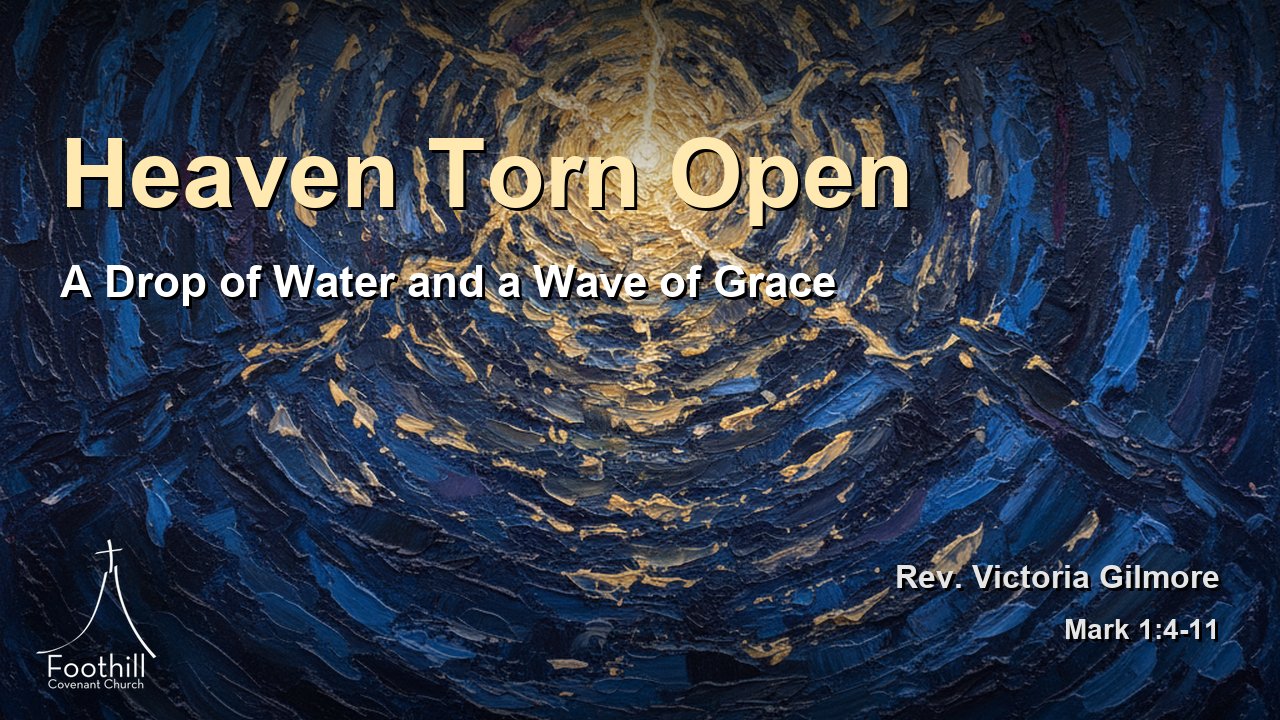
You'll hear why the Greek word for 'torn' appears at both Jesus's baptism and the moment the temple curtain rips at the crucifixion, and what it means that God chose to break through rather than simply open a door.